
Inclusive education - not feeling forgotten in the hallway
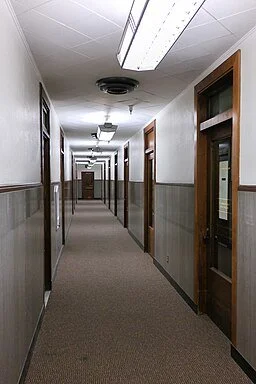
Image from Creative Commons CC BY-SA 3.0 https://creativecommons.org/licenses/by-sa/3.0
There are different ways for educators to approach learning support in schools. One is a medical model approach, where diverse students are seen to be lacking and needing to be fixed. Alternatively, an educator can adopt a social model, where the environment is considered to be lacking and as the problem which needs fixing. In this model, the educator looks at how the environment can be adapted to support students' learning (Jenson, 2018). The following is written by a young person reflecting on her educational experiences and her first-hand experience of educators adopting both medical and social models of disabilities. Lundy (2007) challenges educators to not merely listen to student voices, but to be responsive to their voices, “the (expressed) view must be acted upon, as appropriate” (Lundy, 2027, p. 933).
Being a dyslexic student in the education system is no easy task. Throughout my experiences from a young age until today, education feels like an obstacle course full of confusion, disappointment, large emotions, and stereotypes mixed with huge successes and setbacks. From just 5 years old, I was told that I was different and needed to be removed from the other students and my friends in order to succeed at school. My first clear memory of this was in my early years of primary school, when my teacher told me that I was not keeping up with my spelling tests and was therefore holding back the class. Her solution was to move a desk into a hallway, where I had to sit and rewrite my ‘easy’ spelling list over and over until one day I could rejoin my class. Spoiler alert: I never rejoined my class. I remember sitting in this quiet hallway, looking around, feeling lonely, uncomfortable and confused, while listening to my other peers in the classroom chatting and laughing. I felt an overwhelming emotion of frustration as I tried so hard to ‘just spell’ things correctly so I could join my friends. Yet time and time again, it just never ‘worked’. This was when I started to associate my ‘difference’ with punishment. As years passed, my mother worked with me outside of school with a patience and grace I had never experienced. Never did she raise her voice or show any sign of frustration, never made me feel dumb or helpless. This ‘hallway’ emotion was gone when I was with my mother. I would soon learn how fundamental this was to my education, self-advocacy and belief that I had a place in any classroom.
As years of schooling went by, my mother reinforced these positive ideas, but my teachers and society did not. When I entered the frightening time of high school, I felt trained in the belief that I was dumb, not capable and not worthy to be in a classroom. This belief, unfortunately, was only reinforced. The learning support classroom was removed from other classrooms so I would try to skulk in and out, trying not to be seen. Also, all my exams were in separate classrooms, and I had to explain to my peers why I wasn't at the exam. Suddenly, I noticed this ‘hallway’ emotion was taking over my capacity to believe in myself. After years of trying so hard and working to my max, I had become burnt out; however, I was still achieving highly. I did not understand why I had to be ‘different’ and why it took me so much longer to achieve tasks, why teachers were so dismissive. I didn't see my dyslexia as anything but a burden for teachers in my junior years of high school.
Year 12 provided a different year of education. I had teachers who believed in me, and I started to become validated by these teachers in my educational success. I started to work with my dyslexia rather than against it and began my journey to understand my brain. My mother unpacked the why and provided me with that content and familiar presence of teaching where the ‘hallway’ emotion didn't exist. I became excited and ‘seen’ within my journey. However, my new and progressive understanding was not understood by all of those around me, by both teachers and peers. One of my most supportive teachers asked my mother during a parent-teacher interview what dyslexia really was. I started to make these links and differentiate what dyslexia looked like in my head, and to others, and I saw how powerful people's words could be.
During my final years of high school, I had a fundamental change in my educational experience. I was placed in an extension class due to my grades the year before. I was proud of myself as I hadn't seen much reward for my hard work in school. On my first day in my class, my teacher pulled me aside and explained how I was dyslexic, saying the word as if it were forbidden, and said that I would likely not succeed in her class. My friends watched silently. I stated that I had been asked to join this class; in response, she repeated herself and said yes, but you most likely won't succeed. I sat back down and, filled with rage, did not take her ‘advice’ to leave this class. Many of these lessons were spent in the bathroom crying, and my friends watching me walk in and out of class with my head low. This culture seemed to consume the class, and there was no room to learn ‘differently’ or to think uniquely. This resulted in my friends and classmates believing that there was no room for inclusion in this class unless you wanted to be called out. The culture that a teacher sets in a classroom is extremely powerful in making students feel seen or not seen. It sets an expectation with consequences for behaving in certain ways. It was confusing to me why my dyslexia meant I was not part of this culture, and why my classmates believed it too. I experienced many classroom cultures that demonstrated inclusion with a natural grace; this included the earlier teacher who did not understand dyslexia yet created a beautiful classroom culture where all students could grow and achieve their personal successes. When it comes to classroom culture, there are no excuses.
Coming to the end of this challenging year, I attended a compulsory careers counselling session. Walking in with confidence, I told the careers counsellor that I had applied to almost every university in Aotearoa and was excited to start a Bachelor of Arts. I then continued to tell her how I had applied for three academic scholarships. Waiting for this teacher to celebrate my productivity, she sat in silence for a while, looking at my records. Then they passed me a brochure for a one-year certificate explaining how this might be a more achievable pathway ‘for someone like me’. The ‘hallway’ emotions flooded back. The little girl in me, full of frustration, sat in that room with me, disappointed and wanting to cry. Instead, I advised her that I wanted to go to University and I wanted to get a degree. She moved on to say that the school simply did not have enough time to fill out my scholarship requests. I walked out of that room with my brochure feeling numb.
Fast forward a few months, when I received a life-changing email. “Cara, we are honoured to offer you the Te Paewai o te Rangi: The University of Waikato Scholarship for Outstanding Academic Achievement”. My heart stopped as I read the email in disbelief. “Outstanding” I thought. My younger self and I read this, and the ‘hallway’ feeling was gone. I followed the link to see my application saying ‘incomplete, waiting on (school) recommendation’. While my high school never completed my scholarship application, the University of Waikato saw me as an independent student who deserved to be invested in. For me, this was the start of a whole new chapter.
After successfully completing my Bachelor of Arts, I walked away from the University of Waikato as a confident, strong, smart student who is proud to be dyslexic and proud to be a hard worker. I do not undermine the power of the lecturers and role models I have had in my life to get to this point; many children and adults do not have this.
I cannot explain my sadness that so many students do not have these role models that I have had alongside me; without them, my education journey and life would look incredibly different.
After moving back to Auckland I decided I would continue my studies with a postgraduate in Secondary teaching. I was burning with ambition and excitement to become a teacher just like my mother, one who never, ever makes students feel like they are in the ‘hallway’. Sadly, my first experience of entering this chapter of my life was back in the hallway on day 1. During a literacy and numeracy entrance test, I was shocked back into this ‘hallway’ emotion. It hit me like a ton of bricks, making me realise the lack of this ‘hallway’ emotion for the last three years of my life. Working up the courage to sit this test, I failed and walked out of that room having no self-confidence, motivation or ambition. After being granted a reader-writer, I passed the same test; the only difference was having the tools accessible. So, why do we not supply these tools to our learners and instead, undermine their power? However, even after passing, I was now less motivated to become a teacher and consumed with the ‘hallway’ feeling.
No student should have to carry the burden of the ‘hallway’. No 5-year-old should feel such strong emotions of self-criticism or feel like a burden in classrooms. Even after succeeding, the power of the teacher's words and impact still lingers in me and so many other students. Yet my story is not uncommon, and it saddens me to see the lack of importance we place on our classrooms being inclusive spaces. So many students still carry this weight on their shoulders, believing they are not capable of learning. It is devastating and needs to change; this hallway's emotion can be minimised and prevented. We as humans and educators have the power to diminish this hallway emotion, and we must. Would you like to be in the hallway?
This narrative is a call for change! Inclusive education is a human right. Goal 4 of the United Nations Sustainable Development Goals (SDGs) calls for inclusive and equitable quality education and a promotion of lifelong learning opportunities for all. Section 34 of the New Zealand Education and Training Act 2020 reads "people who have special educational needs (whether because of disability or otherwise) have the same rights to enrol and receive education in state schools as people who do not" (Ministry of Education, n.d.a). Inclusive education should:
welcome all learners to their local school,
see diversity as a strength,
support all students to participate, to learn and to feel a sense of belonging,
intentionally remove barriers to learning,
ensure that learning spaces and activities are designed to support all learners.
(Ministry of Education, n.d. b).
One way for teachers to support all learners is to include Universal Design for Learning (UDL) practices by intentionally designing learning environments which support all learners (Ministry of Education, n.d.c.). Briefly, UDL ensures no student is singled out, instead all students are given choices in their learning. UDL principles include the following:
Engagement (offering options which motivate and sustain motivation for learning).
Representation (offering options of how to present learning).
Action and expression (offering options so every learner can learn, create and share).
(Ministry of Education, n.d. c).
Two simple examples of UDL in action:
Learning environments are set up so all students have the choice of accessing literature through books, graphic novels, eBooks or audiobooks.
Learning environments are set up so all students have the choice to present their learning either in a written format, verbally, through a PowerPoint or video recording.
Upskilling teachers and empowering teachers in training to adopt a social model of disability, which is strengths-based and inclusive, is essential. When teachers are supported to intentionally adapt learning environments to be inclusive, we create environments that welcome all, respect individual strengths, and nurture and empower every learner to achieve individual success. Only then will we see schools transforming, and all students will be able to thrive. What will we do as educators in response to this powerful student's voice?
Reference list
Lundy, L. (2007). “Voice” is not enough: Conceptualising Article 12 of the United Nations Convention on the Rights of the Child. British Educational Research Journal, 33(6), 927–942. http://www.jstor.org/stable/30032800
Ministry of Education. (n.d.a). Inclusive Education: The role of school boards.
https://inclusive.tki.org.nz/about-inclusive-education-2/
Ministry of Education. (n.d.b). Inclusive Education: The role of school boards.
https://inclusive.tki.org.nz/guides/the-role-of-school-boards/review-legal-requirements-under-nz-law/
Ministry of Education. (n.d.c). Inclusive Education: Universal design for learning.
https://inclusive.tki.org.nz/guides/universal-design-for-learning/
Jenson, K. (2018). Discourses of disability and inclusive education.
https://www.hekupu.ac.nz/article/discourses-disability-and-inclusive-education
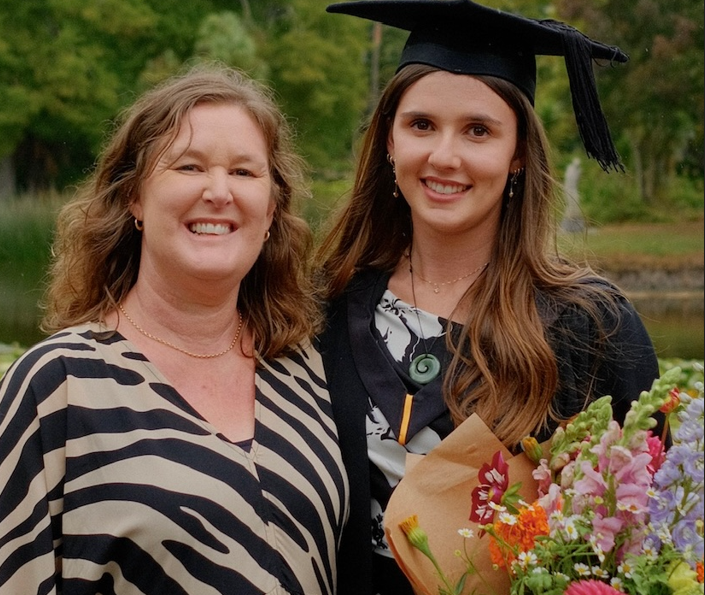
Cara Clark-Howard and Kayleen Clark-Howard
Cara has recently completed her Bachelor of Arts majoring in Education and Geography, minoring in Anthropology. She is currently studying for a postgraduate diploma in Secondary Teaching. Cara is passionate about empowering students to be self-confident and learning more about understanding people's interactions with different spaces and places. She aims to continue her studies and research to understand the interconnection of emotions and values that shape different environments.
Kayleen is a Lecturer in the Institute of Education at Massey University. She has extensive experience as a Senco and learning support teacher in secondary school environments. Passionate about inclusion and inclusive education, where a human rights approach informs her understanding, she aims to promote inclusive education philosophies, aligning her research with the United Nations 2030 Sustainable Development Goals, Goal 4, which aims towards global, inclusive, equitable, quality education and lifelong learning for all.