
Libraries as spaces for digital inclusion – an update
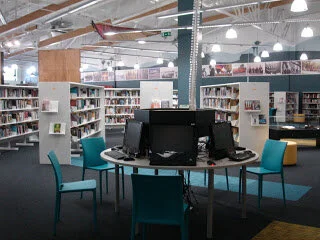
“Libraries are vital community assets that mirror, reflect and service the communities they sit in. They enable communities to share resources, connect and upskill local people, to fully participate in the wider world.” (Library and Information Association of New Zealand Aotearoa (LIANZA), 2016, p. 9). Libraries have transformed from circulating and distributing physical collections to facilitating access to digital content. The role they now play in providing digital access and services is crucial to people who have no other way of connecting to the internet. Libraries are well-placed to support digital inclusion.
Digital inclusion has become a hot topic around the world as societies are fundamentally changed by digital technologies. Digital inclusion is all about people, whānau and communities having what they need to be functioning members of digital societies. These needs include more than just access to the internet and digital devices at suitable times and places. Digital inclusion is also about having the necessary motivation, skills and trust to meaningfully engage, both socially and economically, in a digital society.
We know from research overseas that digitally disadvantaged groups tend to reflect existing societal inequities (i.e. indigenous people, older adults, people with disabilities, low socioeconomic communities and people living in places where there are low rates of internet uptake). While there are a range of services provided by organisations in New Zealand, such as libraries, that support digital inclusion within communities, there has been relatively little research undertaken to find out who is most likely to be excluded and why. The New Zealand government has recognised the importance of digital inclusion in the recently released digital inclusion blueprint document which includes a digital inclusion research agenda.
Initial findings from the libraries project
In a blog post from February last year, Lucila Carvalho wrote about the changing role of libraries in the digital age. In the post, she introduced a current research project between members of the Equity through Education Centre and Public Libraries of New Zealand (PLNZ) that is looking at the role of public libraries and library staff in Aotearoa New Zealand in promoting and supporting digital inclusion. The project, funded by InternetNZ, has been underway throughout 2019 and preliminary findings are starting to emerge.
The project consists of three national surveys of New Zealand public libraries. The first survey focused on library managers and asked them key questions about digital infrastructure, strategy and resources. The second survey targeted library staff who interact with members of the public on a daily basis, and asked questions about staff digital skills, knowledge, interest and confidence to answer library users’ digital questions. It explored how often library staff assist library users with their digital needs and what kinds of assistance they provide on a weekly basis; as well as professional learning and development they have undertaken. The final survey, the library users survey, asked users of public libraries about their digital skills, motivation to use digital devices and services and their ability to identify trustworthy material and keep themselves safe online.
Some of the preliminary findings from the library managers’ survey indicate that larger libraries (i.e. those with over 1,000 visitors per week) were more likely to have a digital specialist than small and medium libraries; just over half of all respondents indicated their libraries were effective to very effective at meeting the digital needs of their library users; and respondents expressed that there is room for improvement when it comes to meeting the digital needs of specialist groups (in particular, those who are blind or have low vision, the deaf and hearing impaired and those with physical impairments and complex needs).
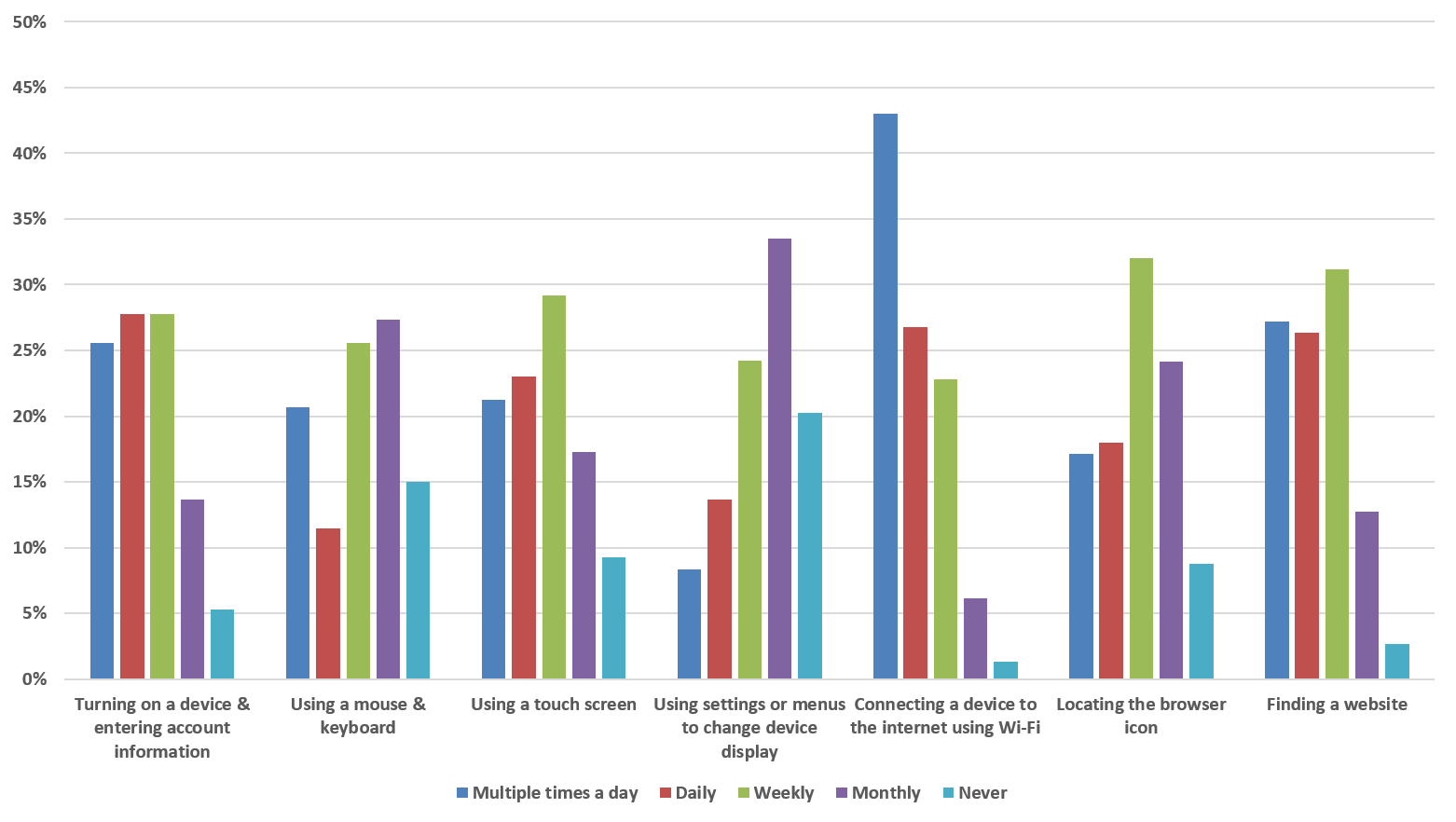
Initial library staff survey findings also make for interesting reading. For example, library staff who were asked how often they assisted library users with foundational digital tasks (see Figure 1). Notably, 93% indicated that they assist library users more than once a week to connect a device to the internet using Wi-Fi, of which 43% were assisting users multiple times a day. Other tasks that library staff are assisting library users with on a regular basis are finding a website as well as turning on a device and entering account information.
The majority of analysis is still to be completed, including the data collected from the library users survey, but these early results suggest that supporting digital inclusion is part of the everyday work of libraries and library staff and there is more to be done to ensure all community members’ needs are met.
References
Library and Information Association of New Zealand Aotearoa (LIANZA). (2016). Libraries in Aotearoa New Zealand 2016. New Zealand.

Maggie Hartnett
Dr. Maggie Hartnett is a senior lecturer within the Institute of Education at Massey University where she teaches and coordinates the postgraduate digital education programmes. She is the associate editor of the Journal of Open, Flexible and Distance Learning. Her research focuses on digital education, particularly intersection of technologies and pedagogies and their influence on learners and teachers’ experiences, motivation, engagement and behaviour in technology enhanced, mediated and immersive learning contexts. Research interests include motivation and engagement in digital environments, digital inclusion and equity, teaching and learning with digital technologies, digital places and spaces of learning that encompasses new learning environments, and emerging digital technologies including open digital badges.
T @magsstev